Avatar Life World: My Story
- 4.4
- Rating
- 10.00M
- Installs
- Free
- Price

 Analysis by App-foxy
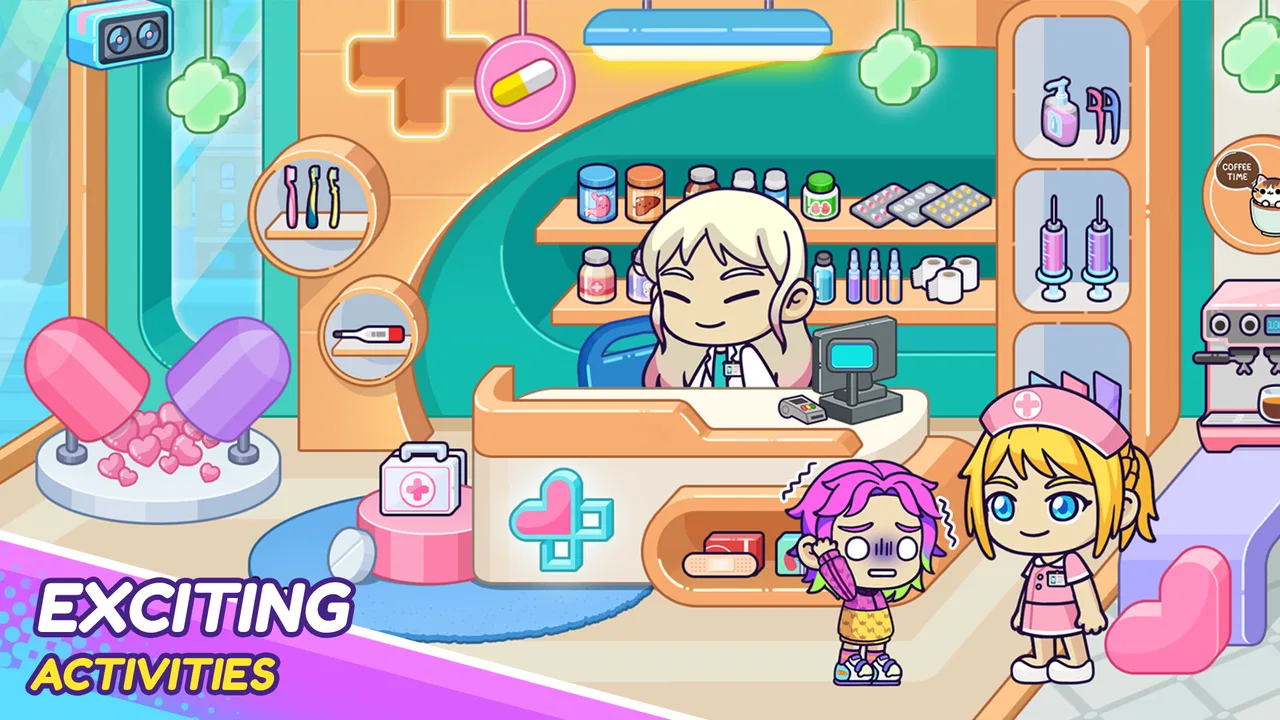
I spent time with Avatar Life World: My Story as a casual simulation game, and my first impression was clear: it is built for players who enjoy creating a personal little world more than chasing a difficult objective. You shape an avatar, arrange scenes, and turn ordinary activities into small stories. That makes it easy to approach, especially when you want something relaxed rather than a game that demands constant concentration.
The appeal is not really about winning. It is about deciding what your character does, how a space feels, and which everyday moments become part of your story. I found that freedom more important than any single activity. The game gives younger players a playful setting, while older players may enjoy it as a short creative break. It is free to start, rated for Everyone, and developed by SkySoft Studio, so it has the broad, accessible profile many families look for in a mobile simulation title.
How Avatar Life World feels in its current form
The current version is 2.8.0, and that matters because this is the kind of game that depends on a comfortable, usable collection of creative tools. A life-simulation game can become tiring if every action feels like a chore, but this one works best when I treat it as a digital playset. I can enter with a simple idea, make a few changes, and leave without feeling that I have failed to complete a long checklist.
You May Also Like

 Blood Strike: 2.5 Anniversary
Blood Strike’s Loadouts Turn Every Drop Into a Tactical Gamble
A close look at Blood Strike’s custom loadouts: how fast access to signature weapons reshapes its battle royale rhythm, rewards preparation, and narrows the gap between fights.

 Pandora - Music & Podcasts
Pandora’s Music Is Easy to Start, but Harder to Recover
Pandora’s strength is its low-effort path from a seed to a station. Its weak spot is how much confidence it asks you to place in connection, setup, and quiet recovery.

 8 Ball Pool
 Is Built on Rivalries, Rematches, and Routine
A close look at the rivalries, rematches, shared routines, and unanswered safety questions that turn a quick pool match into a persistent mobile community.

 Samsung Music
’s Quiet Strength Is Playing What You Already Own
Its reach comes less from spectacle than from dependable access to a personal library. That simplicity is both the app’s strongest retention engine and its ceiling.

 AccuWeather: Weather Radar
AccuWeather Review: A Quick, Clear Forecast for Everyday Decisions
For everyday plans, the best forecast is the one you can understand quickly. AccuWeather makes rain timing, radar, and local conditions easy to act on, with a few trade-offs.

 Hill Climb Racing
Why Hill Climb Racing Still Turns Crashes Into One More Run
A tiny car, a bumpy hill and one more upgrade: Hill Climb Racing keeps resurfacing because its simple chaos makes every near-miss feel personal.
More From Our News Desk



That relaxed structure is also its main limitation. Players who want a strong campaign, carefully balanced challenges, or a clear sense of progression may find the experience too open-ended. There is no need to approach it like a traditional adventure game. The fun comes from making choices for yourself, which means the quality of the experience depends heavily on how much you enjoy inventing situations.
In practical terms, I would describe it as a creative avatar simulation rather than a conventional life-management game. The focus is on self-expression and playful routines. You are not simply managing numbers or optimizing a schedule; you are using the world as a stage. That distinction is useful before downloading it, because it explains both the charm and the moments when the game can feel light on direction.
The audience response suggests that this approach connects with a large number of players. It holds a 4.5 average from around 66 thousand ratings, and the game has passed 10 million installs. Those figures do not guarantee that every player will enjoy it, but they do show that the basic avatar-world formula has found a substantial audience. I can understand why: the controls and concept are easy to grasp, and there is no intimidating learning curve before you can begin making your own scenes.
What I liked about building a personal routine
My favorite way to use the game was to create a small routine instead of trying to explore everything immediately. I would decide what kind of day my avatar was having, choose an activity, adjust the setting, and then continue the story from there. This simple approach made the experience feel more personal. Rather than tapping randomly through options, I had a reason for each change.
That is one of the less obvious strengths of a game like this: it can support short-form storytelling without requiring writing skills. A child can create a scene visually, while an older player can use the same tools to stage a more detailed sequence. I also found that returning with a specific idea was more rewarding than opening the game with no plan. For example, designing a quiet morning, a busy family visit, or an after-school scene gives the available choices more meaning.
Another useful habit is to make changes gradually. When I tried to alter too many parts of a scene at once, the creative process became less focused. Starting with the avatar, then the setting, then the activity helped me see what was missing. This is not a formal tutorial feature; it is simply a practical workflow that makes the open-ended design easier to manage.
The game can also work well as a shared activity. A parent and child can take turns deciding what happens next, or siblings can build separate versions of the same situation. Because the content rating is Everyone, it is positioned for a broad audience, although adults should still use their own judgment about purchases and screen time. The age label makes it approachable, but it does not remove the need for family rules around mobile play.
How the latest version affects returning players
For existing users, version 2.8.0 is best understood as the current point in the game’s ongoing development rather than a reason to expect a completely different genre. The important question is whether the core creative loop still feels useful after repeated sessions. In my experience, it does when I approach it as a place for small experiments instead of expecting endless novelty from every visit.
That distinction helps set realistic expectations about updates. A newer version can improve the overall experience, but it does not automatically solve the basic trade-off between freedom and direction. Players who already enjoy making avatars and scenes will probably appreciate having a current build to return to. Players who stopped because they wanted deeper goals may still feel the same gap, even if the game has evolved since they first tried it.
I would also avoid judging the game after only a few minutes. The first session can feel simple because the real value appears when you start combining choices into a personal scenario. At the same time, I would not recommend forcing yourself to continue if you are waiting for a structured story to appear. The game’s identity is its sandbox-like creativity, and that identity remains central to how it plays.
For someone reinstalling after a long break, my advice is to begin with a concrete challenge: create a scene with a beginning, a change, and an ending. For example, start with an ordinary visit, introduce a small problem, and finish by rearranging the setting. This gives the session a shape and makes it easier to notice whether the current version still offers the kind of freedom you wanted.
Where it fits among similar mobile games
Compared with more goal-driven simulation games, Avatar Life World: My Story feels less like a management task and more like a toy box. Traditional life simulators often ask players to monitor resources, relationships, schedules, or long-term progress. That can be satisfying when you want consequences and planning. Here, I found the emphasis much closer to arranging a scene and imagining what happens inside it.
It also differs from dress-up-focused games. Changing an avatar may be part of the attraction, but the larger appeal is the world around that character. If your main interest is collecting outfits or perfecting one visual look, a dedicated fashion game may provide a deeper experience. If you prefer placing a character into different everyday situations, this title is the more natural fit.
Compared with social or multiplayer alternatives, the experience is more self-contained. That can be a benefit for players who want creative play without public interaction, but it also means the motivation has to come from your own ideas. There is less pressure to show progress to other people, yet there may also be fewer external reasons to keep returning.
My practical recommendation is simple. Choose this game if you want a free, accessible way to invent avatar-based scenes and you are comfortable creating your own objectives. Choose a more structured simulation if you need missions, measurable progression, or complex resource decisions. Choose a dedicated creative editor if you want precise control over every visual detail. The right alternative depends on whether you value spontaneity, strategy, or editing depth.
Everyday use: a short creative break
A realistic use case is a ten-minute break between ordinary responsibilities. I might open the game while waiting for an appointment, decide that my avatar is preparing for a special day, arrange the scene, and stop once the small story feels complete. That is more satisfying than aimlessly tapping because the session has a clear creative purpose without becoming a major time commitment.
For children, it can become a storytelling prompt. An adult can ask, “What happened before this scene?” or “What could change next?” The game then supports conversation rather than replacing it. I would keep the activity short for younger players and agree in advance about optional purchases. The free entry point is helpful, but the available in-app purchase range runs from $0.99 to $119.99 per item, so purchase controls are worth taking seriously.
For an older player, another useful workflow is to build a recurring character. Give the avatar a consistent personality, then place that character in a different situation during each session. This creates continuity that the open-ended format does not necessarily provide by itself. It also helps answer the common question, “What am I supposed to do next?” You supply the next chapter instead of waiting for the game to assign one.
Where the experience still falls short
The biggest weakness is the possibility of creative fatigue. Once the initial excitement of making a character and arranging scenes fades, players may want more meaningful consequences or a stronger reason to return. If your enjoyment depends on unlocking a carefully paced sequence of goals, this game may feel too loose. Its freedom is genuine, but freedom without personal ideas can quickly become repetition.
The purchase structure is another point to consider. The game is free, which makes trying it easy, but the broad range of optional item prices means families should not treat the free label as the whole financial picture. I recommend checking device purchase protections before handing the game to a child. That is not a criticism unique to this title, but it is especially relevant in a creative game where optional additions can feel tempting during experimentation.
There is also a difference between accessibility and depth. A simple interface helps new players begin quickly, but a player looking for detailed simulation systems may eventually find the experience less demanding than expected. I enjoyed the lack of pressure, yet I would not call it a replacement for a complex life simulator. It is better at encouraging imagination than at modeling a complete virtual life.
Performance expectations should also be realistic. The minimum operating system is Android 7.0, so the compatibility requirement is relatively approachable for older supported devices. Still, the experience of any mobile game can vary with the device, available storage, and general system condition. I would keep the device updated and close unnecessary apps if the game feels less responsive than expected, rather than assuming the creative design itself is the problem.
Who should play it and who should skip it
I would recommend it to children who enjoy pretend play, families looking for a shared storytelling activity, and casual players who want a gentle simulation without pressure. It is also a good match for anyone who likes creating scenes more than completing missions. The Everyone rating and free starting price make the first step uncomplicated, while the current version gives returning players a clear build to use.
I would be more cautious about recommending it to players who need a strong narrative, competitive systems, or deep management mechanics. It is not the best choice if you want a game to tell you exactly what to do for hours. It may also disappoint players who dislike optional purchases in free-to-play games, particularly when they prefer a single upfront purchase with everything included.
One useful test is to ask yourself whether you can invent three scenes before downloading. If you can imagine a morning routine, a celebration, and an unexpected problem for your avatar, you will probably find enough material to begin. If you cannot think of a situation you would enjoy creating, the open format may feel empty no matter how polished the presentation is.
What I would watch as the game continues
Future development will be most meaningful if it strengthens the creative loop without making it complicated. I would pay attention to how SkySoft Studio balances new possibilities with ease of use. More content can be valuable, but only if players can find and combine it without feeling overwhelmed. For this type of game, organization and discoverability matter almost as much as the number of available choices.
I would also watch for signs that returning players have stronger reasons to revisit their worlds. New ways to build continuity, organize personal stories, or give scenes a clearer sense of progression could address the main weakness I felt. The challenge is preserving the relaxed quality that makes the game approachable while giving experienced players something beyond the first burst of experimentation.
Updates should also be judged by their effect on everyday play, not just by how much new material appears. A small improvement that makes scene creation smoother may be more useful than a large addition that is difficult to locate. My expectation is not that the game should become a demanding simulation; it should remain an easy creative space while gradually offering more depth to people who return regularly.
My recommendation after playing
Avatar Life World: My Story works because it keeps the central idea understandable: create an avatar, shape a setting, and decide what kind of life or story unfolds. I liked that I could play briefly without falling behind, then return later with a completely different idea. The game is approachable, imaginative, and broad enough for family use, but its open-ended nature will not satisfy everyone.
The most important thing to know is that your imagination is part of the game’s content. You will get more from it if you create personal challenges, develop recurring characters, or use it as a prompt for shared storytelling. Without that extra involvement, the experience can feel shallow compared with a structured simulation or a more advanced creative tool.
With a 4.5 average, around 66 thousand ratings, and more than 10 million installs, it has clearly earned attention from a wide audience. I see the appeal, especially for casual players and families. The free entry point is convenient, the Everyone rating keeps the concept accessible, and SkySoft Studio has continued the product into version 2.8.0. Just remember to consider optional purchases and your own need for progression before committing time to it.
My final view is positive but specific: I would recommend it as a playful avatar-world builder, not as a deep life simulator. If you want a calm place to invent small stories and decorate everyday moments, it is worth trying. If you need complex systems, a fixed plot, or a clear end goal, another game in the simulation category will probably serve you better.
FAQs for Avatar Life World: My Story
01What is Avatar Life World: My Story about?
Avatar Life World: My Story is an immersive simulation game that allows players to create and customize their own avatars. You can explore a vibrant world, engage in various activities, and shape your storyline. The game emphasizes creativity and personal expression, providing endless possibilities through diverse scenarios and interactions.
02Is Avatar Life World: My Story free to play?
Yes, Avatar Life World: My Story is free to download and play. However, it does offer in-app purchases that allow users to buy items, outfits, and other enhancements. These purchases can enhance the gaming experience but are not necessary to enjoy the core features of the game.
03What age group is Avatar Life World: My Story suitable for?
The game is designed for players aged 12 and above. It contains mild fantasy violence and social interaction elements that are suitable for teenagers. Parents should be aware of the in-app purchases and online interactions that might occur while playing the game.
04Does Avatar Life World: My Story require an internet connection?
While you can enjoy some features of Avatar Life World: My Story offline, an internet connection is required for accessing all online content, updates, and social interactions. Being online ensures you can explore the full potential of the game, including community events and challenges.
05How customizable are the avatars in Avatar Life World: My Story?
Avatar customization is one of the game's standout features. Players can personalize their avatars with a wide range of clothing, hairstyles, accessories, and more. The game allows you to express your individual style and personality, making each avatar unique and tailored to your preferences.
Pros
- Engaging interactive storylines.
- Customizable avatars and worlds.
- Frequent updates with new content.
- User-friendly interface for easy navigation.
- Social features to connect with others.
Cons
- In-app purchases can be costly.
- Occasional lag on older devices.
- Limited offline functionality.
- Ads can be intrusive at times.
- Requires a stable internet connection.

Avatar Life World: My Story
Gallery